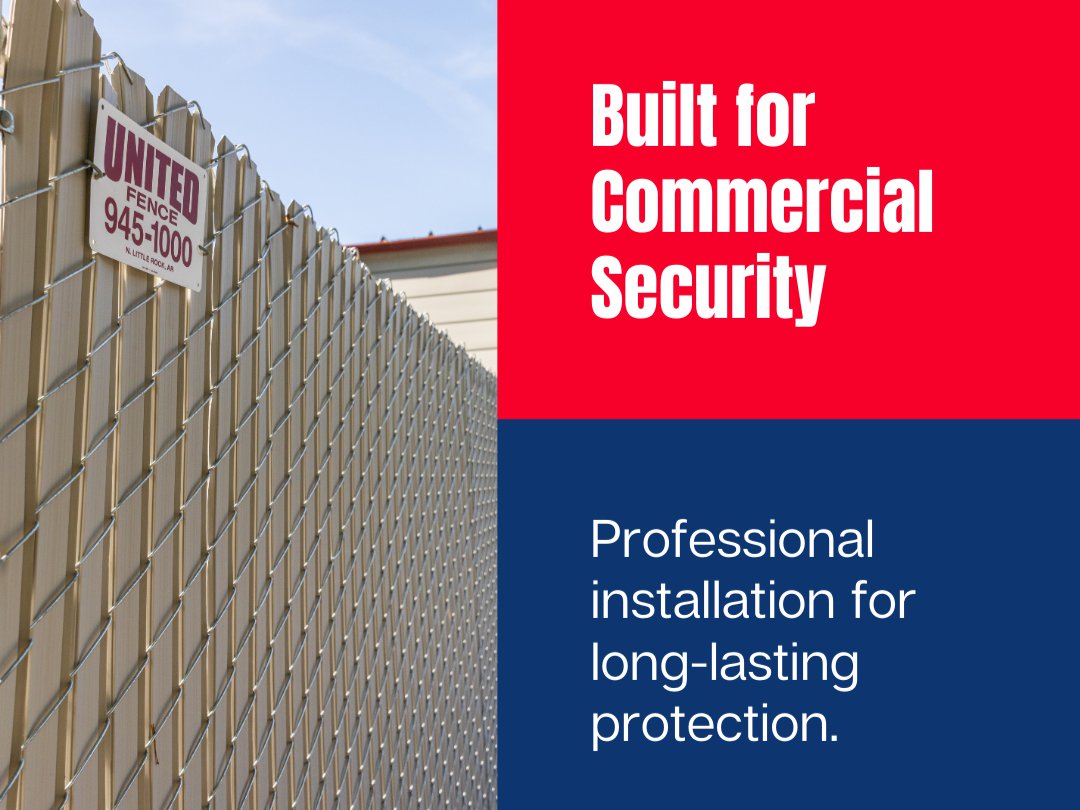
High-security fence panels are rigid fence sections, typically welded mesh or similar anti-climb designs, built to deter climbing, resist tampering, and create a stronger perimeter than standard chain-link for higher-risk properties.
If you are searching for high-security fence panels, you are usually dealing with a real risk, not a cosmetic upgrade. Maybe you manage a facility that cannot tolerate after-hours access. Maybe you have had repeated trespassing, theft, vandalism, or vehicles pushing into restricted areas. In those situations, a basic fence can become a false sense of security because it looks like a boundary but does not reliably delay entry.
That is why many Arkansas property owners turn to United Fence & Construction Co. for professionally designed and installed security fencing systems. Understanding how your fencing options work is the first step in choosing the right solution for your perimeter.
Key Takeaways:
- High-security fence panels are usually rigid welded systems designed to deter climbing and reduce cutting and prying opportunities.
- Anti-climb mesh is one of the most common choices because it removes handholds while keeping clear sight lines for cameras and staff.
- Your security level depends on the entire system, including posts, mounting hardware, corners, gates, and how the fence is set.
- The biggest vulnerabilities are often gates and access points, not the straight runs of fence.
- A durable finish matters in Arkansas conditions. Corrosion resistance and maintenance planning should be part of your specification.
What Counts as High-Security Fence Panels?
High-security fence panels are built to make intrusion harder, louder, slower, and easier to detect. The panels are typically welded steel mesh or similar rigid construction, designed to reduce climb points, resist deformation, and hold their shape over time. Most installations use a panel-and-post system rather than loose fabric fencing.
A “high-security” fence is also about predictability. You want a system that performs the same way across the perimeter, including corners, transitions, and gate areas. That is why panel type, post spacing, bracket selection, fasteners, and foundations matter as much as the panel itself. A strong panel on a weak post layout is still a weak perimeter.
How Do High-Security Fence Panels Differ From Standard Chain-Link?
Standard chain-link is popular because it is affordable and fast to install, but it has known weaknesses in higher-risk environments. The openings are large enough to climb easily. The fabric can be cut and peeled back with tools. In many cases, the fence can also be lifted or spread if the frame and tensioning are not robust.
High-security fences address those issues by using rigid construction and tighter geometry. Welded mesh panels do not “give” the same way chain-link fabric can. Anti-climb patterns remove convenient grips. A well-specified panel system also makes it harder to create a clean breach without drawing attention, which is often the difference between an incident and a prevented incident.
How Do High-Security Fence Panels Deter Intrusion?
Security fencing works best when it combines deterrence and delay. You are not trying to make a fence “impossible.” You are trying to make it difficult enough that an intruder gives up or gets detected before they can get through.
Anti-Climb Welded Mesh Panels
Anti-climb welded mesh is one of the most common types of high-security fencing because it reduces handholds and footholds without blocking visibility. That visibility matters for monitoring, whether you rely on staff patrols, cameras, or both. Mesh also tends to look more professional and controlled than aggressive add-ons, which is important for many public-facing facilities.
Anti-climb panels are usually chosen when you want a clean perimeter that discourages scaling and makes cutting attempts slower. The weld quality and wire gauge matter, but so does the pattern. If the openings are large enough to grip, you lose the main advantage.
358 Mesh Panels
“358 mesh” is a common term referring to a tight-aperture welded mesh pattern that is difficult to climb because fingers and toes cannot find a reliable purchase. It is also hard to cut quickly because the opening pattern limits tool positioning and leverage.
358-style mesh is often used on sites where you need an anti-climb fence that still allows full visibility into and out of the property. It is common around sensitive perimeters because it supports surveillance and reduces hiding places compared to opaque walls or dense privacy panels.
Palisade and Other High-Security Styles
Depending on your property type, you may also see palisade fencing considered “high security,” especially when the priority is discouraging climbing and creating a strong visual deterrent. Palisade can be effective, but it is not always the best match for every site. In public-facing areas, some owners prefer welded mesh because it maintains visibility and can feel less harsh while still performing well.
| Fence Type | Primary Purpose | Key Advantages | Best For |
|---|---|---|---|
| Anti-Climb Welded Mesh | Reduce scaling attempts | Small openings, strong welds, clean appearance | Public-facing facilities, campuses, storage |
| 358 Mesh Panels | Maximum climb resistance | Tight aperture pattern, harder to cut, excellent visibility | Sensitive perimeters, utilities, government sites |
| Palisade Fencing | Strong visual and physical deterrent | Vertical pales discourage climbing | Industrial sites, high-risk properties |
| Specialty High-Impact Systems | Withstand vehicle or force impact | Reinforced posts and foundations | Critical infrastructure, high-risk zones |
There are also specialty systems designed for specific threats, such as high-impact zones or areas where vehicle contact is a concern. The correct selection depends on the threat profile, the environment, and how the site operates day to day.
Benefits of High-Security Fence Panels
People usually start shopping for high-security fence panels because they want “more security,” but the real benefits are more specific. When the fence is chosen and installed correctly, you get measurable improvements in control and reliability.
Better Intrusion Delay
A stronger, anti-climb panel slows down attempts to get over, through, or around the perimeter. Delay matters because it increases the chance of detection and response. If your site relies on alarms, patrols, or cameras, a fence that buys time is doing its job.
Cleaner Visibility for Monitoring
Many welded mesh security panels preserve sight lines. That helps cameras capture usable footage and helps staff see what is happening near the fence line. Visibility also reduces the hidden corners that attract after-hours activity.
More Consistent Perimeter Performance
High-security fence panels can reduce weak spots that show up in fabric fencing over time, such as sagging, loose ties, and deformation. A rigid system that stays aligned tends to be easier to maintain and harder to manipulate.
Professional Appearance Without Gimmicks
Some security upgrades look aggressive or improvised. High-security panels can provide serious performance with a clean, consistent look. That matters for facilities that serve the public or host visitors.
Long-Term Durability and Predictable Maintenance
A properly finished steel system can stand up to Arkansas heat, humidity, storms, and day-to-day wear. Durability reduces lifecycle cost because you are not constantly repairing rust, sag, or damage from minor impacts.
Better Compatibility with Gates, Access Control, and Surveillance
Security fencing is rarely just “fence.” Many sites need controlled entry, vehicle gates, keypad access, card readers, or integration with cameras and lighting. High-security fence panels are commonly specified as part of that larger perimeter plan.
Where High-Security Fence Panels Are Commonly Used
High-security fence panels are not just for extreme facilities. In Arkansas, the need usually comes down to property access control, asset protection, liability reduction, and keeping the right people in the right places. Some locations that might utilize high-security fencing include:
- Storage units and self-storage facilities
- Libraries and public facilities
- Courthouses
- Government buildings
- Utilities and critical infrastructure
- Warehouses and industrial facilities
- Construction yards and equipment storage
- Schools, campuses, and healthcare facilities

The Fence Panel Is Only One Part of the Security Outcome
Security system failures are usually not the middle of a panel. They are corners, gates, transitions, and installation details.
Posts, Spacing, and Foundations
A high-security fence is only as strong as the structure holding it. Posts set too shallow or spaced incorrectly can reduce rigidity and create leverage points. Proper foundations, consistent spacing, and strong mounting hardware are what keep panels from flexing or working loose over time.
Corners, Grade Changes, and Transition Zones
Corners and slopes are common weak points when fencing is treated like a commodity. A security fence should maintain integrity through grade changes, transitions between fence types, and junctions near buildings. These areas need intentional design so you do not create climb assists, gaps, or soft points.
Gates and Controlled Entry Points
If you are investing in high-security fences, you should assume gates need equal attention. Gates are where vehicles and people pass through, so they are also where intruders focus effort. Hardware selection, latch and lock protection, anti-lift measures, and access control planning matter as much as the panel selection.
Add-ons and Integrations That Actually Make Sense
Some security add-ons help and some create cost and complexity without real improvement. The best upgrades are the ones that align with your risks and your daily operations.
Lighting and Camera Planning
Lighting and cameras work better when the fence line is visible and uncluttered. Welded mesh panels help because they preserve sight lines. If you plan to use cameras for perimeter monitoring, it is worth thinking about mounting locations, angles, and how landscaping or stored items might block views later.
Access Control and Monitoring
Facilities that need control over entry often pair fencing with access systems like keypad entry, card readers, timed gate schedules, or monitored entry points. High-security fences support that approach by making it harder to bypass controlled access elsewhere on the perimeter.
Anti-Dig and Bottom-Edge Considerations
If the risk includes tampering at the bottom edge, the system should address it. This can involve grade management, continuous bottom alignment, and reinforcement approaches that make it difficult to create gaps under the fence line.
Materials and Finishes That Hold Up in Arkansas
Arkansas weather is hard on fencing over time. Heat, humidity, storms, and constant sun exposure can degrade coatings and accelerate corrosion on lower-quality systems throughout Little Rock, Benton, Bryant, Jacksonville, Sherwood, and even more Arkansas communities. If you want predictable performance, you want a finish and coating strategy designed for long-term outdoor exposure.
For many high-security installations, galvanized steel with a protective topcoat is a common approach because it provides corrosion resistance and reduces maintenance burden. Powder coating can also help with appearance and longevity when applied over the right base protection. The main point is to avoid treating coating as optional. A degraded fence becomes both a security and liability problem.
How to Choose the Right High-Security Fence Panels for Your Site
If you want to narrow your options quickly, start with the operational reality of the property. A self-storage facility has different needs than a courthouse, and a public library has different requirements than an industrial yard. The “best” panel is the one that matches the risk while still allowing the site to operate smoothly.
In practice, the right choice usually comes from answering a handful of questions:
- What is the main concern: climbing, cutting, vehicle access, or after-hours trespass?
- Where are your most vulnerable points: gates, corners, rear property lines, or areas with low visibility?
- Do you need visibility through the fence line for monitoring and safety?
- What does daily access look like, and how many people need legitimate entry?
- What finish and maintenance expectations make sense for the life of the property?
When you answer those questions first, panel selection becomes easier, and the finished perimeter performs more predictably.
FAQs About High-Security Fence Panels
What Are High-Security Fence Panels?
High-security fence panels are rigid fence sections, commonly welded mesh systems, designed to deter climbing, resist tampering, and provide a stronger perimeter than basic fencing for higher-risk properties.
Are High-Security Fence Panels Better Than Chain-Link?
High-security fences can be better than chain link in some situations, especially when climbing resistance, rigidity, and intrusion delay matter. Chain-link can work in lower-risk settings, but high-security panels are often chosen when the site has higher stakes or repeated incidents.
What is Anti-Climb Fencing?
Anti-climb fencing is designed to reduce or eliminate handholds and footholds. Welded mesh patterns are common because they discourage climbing while preserving visibility for monitoring
Do High-Security Fences Work with Cameras and Access Control?
High-security fences do work with cameras and access control, especially welded mesh systems that preserve sight lines. Many sites combine high-security panels with lighting, cameras, and controlled entry systems to create a more complete perimeter plan.
Who Installs High-Security Fences Near Me in Arkansas?
United Fence & Construction Co. proudly installs high-security fence systems in cities across Arkansas. Property owners in a variety of industries work with our experienced commercial fencing contractors who each understand access control, welded mesh systems, gate integration, and long-term perimeter performance in demanding environments.
High-Security Fence Panels Installed Across Arkansas by United Fence & Construction Co.
If you are comparing high-security fence panels because your site has real exposure, focus on the perimeter as a system. Panels, posts, gates, and entry control should be planned together so you do not harden one area while leaving an easier path open somewhere else.
United Fence & Construction Co. can help you match the panel type to how your property actually functions, then build a perimeter that is secure, maintainable, and monitor-friendly. We serve areas across Arkansas with expertise, installing high-security fence panels for facilities in and around Little Rock, North Little Rock, Conway, Benton, Bryant, Cabot, and more.
Contact United Fence & Construction Co. today to request a quote. Or, explore our project gallery to see how our fences perform in real Arkansas installations


Leave a Reply