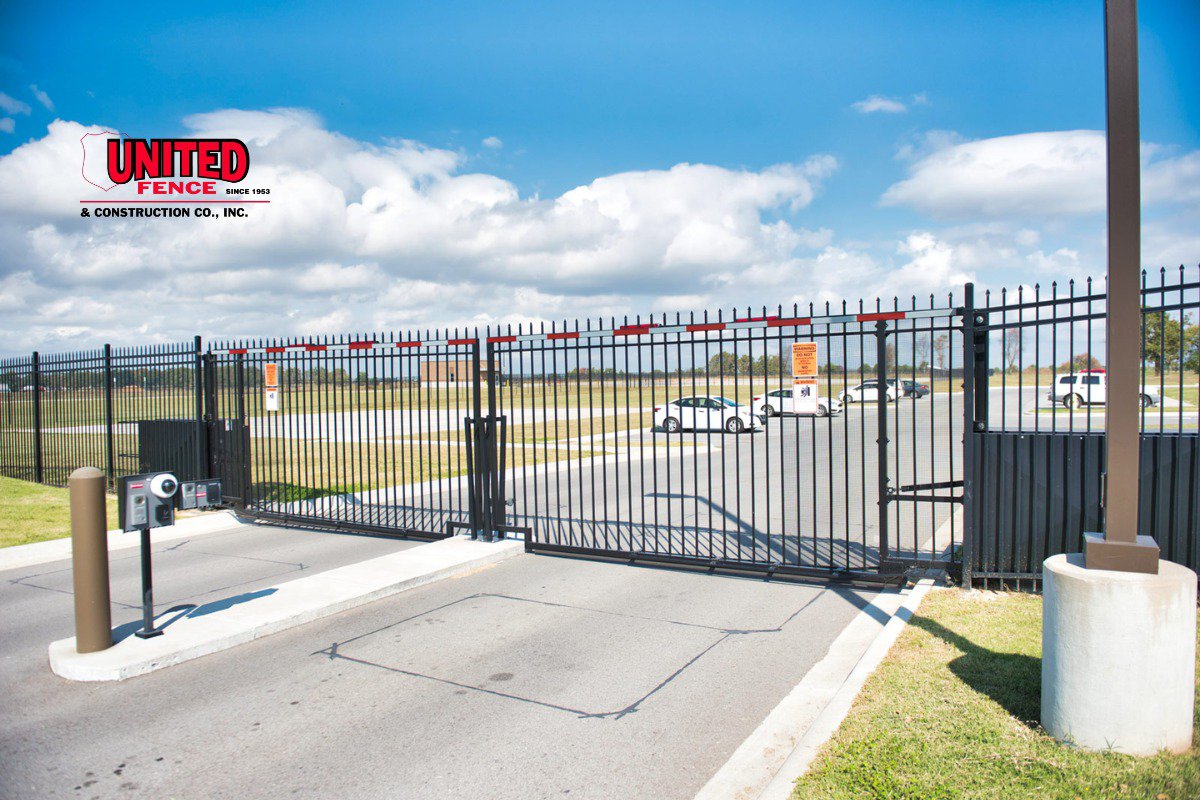
You need automatic gate systems for your facility, but which type delivers the security, durability, and efficiency your operation demands? Choosing between swing gates, sliding gates, barrier arms, or overhead systems affects traffic flow, maintenance costs, and long-term reliability. Will a sliding gate handle your daily vehicle volume? Does your loading dock need an overhead system? Understand access control features to protect your inventory while maintaining operational efficiency.
Key Takeaways:
- Automatic gate systems for commercial properties include sliding gates for high-traffic areas, swing gates for wide entrances, barrier arms for parking management, and overhead gates for space-constrained locations.
- Modern automatic gate systems integrate with keypads, card readers, biometric scanners, mobile apps, and building management systems for comprehensive access control.
- Essential components include heavy-duty motors (gear-driven, chain-driven, or hydraulic), control panels, safety sensors, and battery backup systems.
- Professional installation ensures proper motor sizing, safety sensor placement, electrical integration, and compliance with commercial building codes.
- Regular maintenance, including lubrication, sensor cleaning, battery testing, and track inspection, extends system lifespan and prevents costly downtime.
Understanding Different Types and Key Features
Selecting the right type of gate system depends on your facility's physical layout, traffic patterns, and operational requirements. Sliding gates provide space efficiency and durability for high-volume operations. Swing gates deliver traditional aesthetics with powerful access control. Barrier arms excel at rapid-cycle traffic management, while overhead systems maximize space in constrained environments. Understanding these fundamental differences helps you match system capabilities to your facility's specific needs.
Types of Automatic Gate Systems for Commercial Applications
| Type of Gate | Description | Key Benefits | Common Use Cases |
|---|---|---|---|
| Sliding Gate Systems | Move horizontally along fixed tracks or operate as cantilever systems | Handle hundreds of daily cycles while maintaining reliable performance | Manufacturing facilities, distribution centers, sloped terrain, or high-traffic applicatioins |
| Swing Gate Systems | Open inward or outward on hinges | Modern automations include safety sensors, emergency overide controls, and integration with access management platforms | Facilities with wide, flat entrances, such as corporate campuses or office parks |
| Barrier Arm Gates | Operate quickly, opening and closing in seconds | Maintain traffic flow while controlling access; handles hundreds of daily vehicle entries | Parking facilities, warehouses, private access roads; where vehicle flow management is needed |
| Overhead Gate Systems | Lift vertically, similar to commercial garage doors | Maximize usable space while providing secure closure | Distribution centers, service bays, high-value inventory facilities; locations where horizontal space is limited |
Each configuration offers a distinct advantage; United Fence Company has gate systems for a variety of commercial and industrial applications.
Motor Types and Performance
Gear-driven motors provide reliable operation for light to medium-duty commercial gates with quiet operation suitable for office environments.
Chain-driven motors deliver the power necessary for heavy industrial gates, handling substantial weight and frequent operation cycles standard in warehouses and distribution centers.
Hydraulic motors supply smooth, powerful operation with exceptional durability in extreme temperatures and harsh environmental conditions. These systems require less maintenance than other motor types and provide precise control over gate movement speed.
Essential Automatic Gate System Components
The control panel functions as the central hub for automatic gate systems, receiving signals from access devices and commanding motor operations. Modern panels integrate with building management systems, allowing centralized monitoring and control across multiple entry points.
Safety sensors protect personnel, vehicles, and equipment from gate-related accidents. Photo-eye sensors create invisible beams across gate paths, while pressure-sensitive edges detect contact. If sensors detect obstructions, the gate immediately stops or reverses movement, preventing injuries and property damage.
Battery backup systems maintain gate operation during power outages. Commercial-grade batteries typically provide 24-48 hours of emergency operation, ensuring business continuity and preventing vehicle lockouts during electrical failures.
Access Control and Security Features
Modern automatic gate systems provide various authentication methods, such as proximity cards, temporary codes, and biometric scanners, ensuring robust security for sensitive areas.
The integration of video surveillance enhances security by documenting entry and exit events through technologies like license plate recognition and high-resolution cameras for clear imagery.
Emergency override systems ensure gates remain accessible to emergency services, with fail-safe operations during power outages.
Professional Installation Requirements
Professional installation ensures gate systems meet local building codes, electrical requirements, and safety standards. Licensed contractors properly size motors for gate weight and duty cycle, preventing premature failures. They correctly position safety sensors to protect all hazard zones while maintaining reliable operation.
Installation costs for commercial gate systems depend on gate size, motor specifications, access control complexity, and site preparation requirements. Additional costs include concrete foundations, electrical service upgrades, and integration with existing security infrastructure.
Site Preparation
Successful automatic gate installation requires proper foundation construction with concrete piers extending below frost lines. Electrical service must provide adequate amperage for motor operation plus accessories, including lights, intercoms, and access control equipment.
Professional installers coordinate with utility companies to locate underground utilities before excavation, preventing service disruptions and costly repairs. They account for factors including wind loading, seismic requirements, and environmental conditions affecting long-term performance.
Automatic Gate Systems: Routine Maintenance
Monthly inspections should include cleaning photo-eye sensors, checking for loose hardware, and testing safety sensor functionality. Remove debris from tracks or guide wheels that could interfere with the smooth operation of automatic gate systems.
Quarterly maintenance involves lubricating all moving parts, including hinges, chains, bearings, and slide tracks. Use appropriate lubricants specified by manufacturers. Annual professional service should include comprehensive electrical testing, motor performance evaluation, and control panel inspection.
Common Issues and Solutions
When automatic gate systems fail to respond, first check the power supply and circuit breakers. Verify remote control batteries and test using alternative access methods, including keypads or manual controls. Gates moving slowly or making unusual noises typically indicate insufficient lubrication or mechanical binding.
Battery backup systems require replacement every 2-3 years regardless of apparent condition. Safety sensors degrade from weather exposure and require replacement when showing erratic behavior or physical damage. Use manufacturer-specified replacement parts, like those recommended by United Fence Company, to ensure compatibility and performance.
Selecting the Right Automatic Gate Systems
Successful automatic gate system selection begins with a comprehensive site evaluation. Measure available clearance space, noting overhead obstructions, underground utilities, and lateral constraints. Document traffic patterns, including peak volume periods, vehicle types, and entry/exit frequency.
High-volume facilities require automatic gate systems rated for continuous duty cycles. Distribution centers processing hundreds of daily truck movements need industrial-grade motors, reinforced gate construction, and redundant safety systems.
Cost and ROI Considerations
Calculate the total cost of ownership by factoring in maintenance expenses, energy consumption, and expected operational lifespan. Quality commercial automatic gate systems provide 15-20 years of reliable service with proper maintenance, while budget equipment often requires replacement within 5-7 years.
Consider energy-efficient options, including solar-powered systems for remote locations or facilities with sustainability goals. Solar installations eliminate ongoing electricity costs while supporting corporate environmental initiatives.
Frequently Asked Questions About Automatic Gate Systems

What is the average lifespan of commercial automatic gate systems?
Quality commercial automatic gate systems typically last 15-20 years with proper maintenance. System longevity depends on usage frequency, environmental conditions, and maintenance quality. Motors and control panels generally require replacement before structural gate components. Facilities with high daily cycle counts may need motor upgrades every 10-12 years.
How do automatic gates perform in extreme weather?
Commercial-grade automatic gate systems operate reliably in temperatures from -40°F to 140°F when properly specified. Hydraulic motors excel in cold climates, maintaining smooth operation where other motor types stiffen. Snow and ice require heated sensors and track heating systems for reliable operation.
Can existing gates be automated?
Many existing manual gates can be retrofitted with automatic gate systems if structurally sound and properly balanced. Gate weight, hinge condition, and available mounting points determine retrofit feasibility. In some cases, replacing aging gates with new automated systems proves more cost-effective than retrofitting, especially when existing gates show rust or structural weakness.
What access control methods work best for commercial facilities?
Manufacturing facilities typically use proximity cards for employees, plus visitor management systems. Warehouse operations benefit from license plate recognition for known trucking companies combined with intercom systems. Corporate campuses often deploy mobile credential systems, allowing employees to use smartphones. Select automatic gate systems supporting multiple authentication methods for maximum flexibility.
Automatic Gate Systems at United Fence Company
Selecting the right automatic gate systems for your commercial or industrial facility requires balancing security needs, operational efficiency, and long-term reliability. The proper system configuration protects assets, manages traffic effectively, and provides years of dependable service while minimizing maintenance costs and operational disruptions.
At United Fence Company, we understand that commercial gate systems represent significant investments requiring expert guidance. We help businesses evaluate options, specify appropriate equipment, and implement solutions matching their unique operational requirements. Our experience across manufacturing facilities, distribution centers, corporate campuses, and industrial parks ensures we recommend systems proven in demanding commercial applications.
We connect property managers and facility operators with quality automatic gate systems backed by professional installation and ongoing support. Whether you need robust sliding gates for high-volume logistics operations, sophisticated access control for security-sensitive facilities, or energy-efficient solutions for remote locations, proper system selection and installation make the difference between smooth daily operation and costly frustrations.
Visit our website to explore options suited to your facility's requirements, or contact our team to schedule a site assessment and discuss how the right automatic gate systems can benefit your operation. Your facility deserves access control solutions engineered for commercial demands and built to perform reliably for years.


Leave a Reply