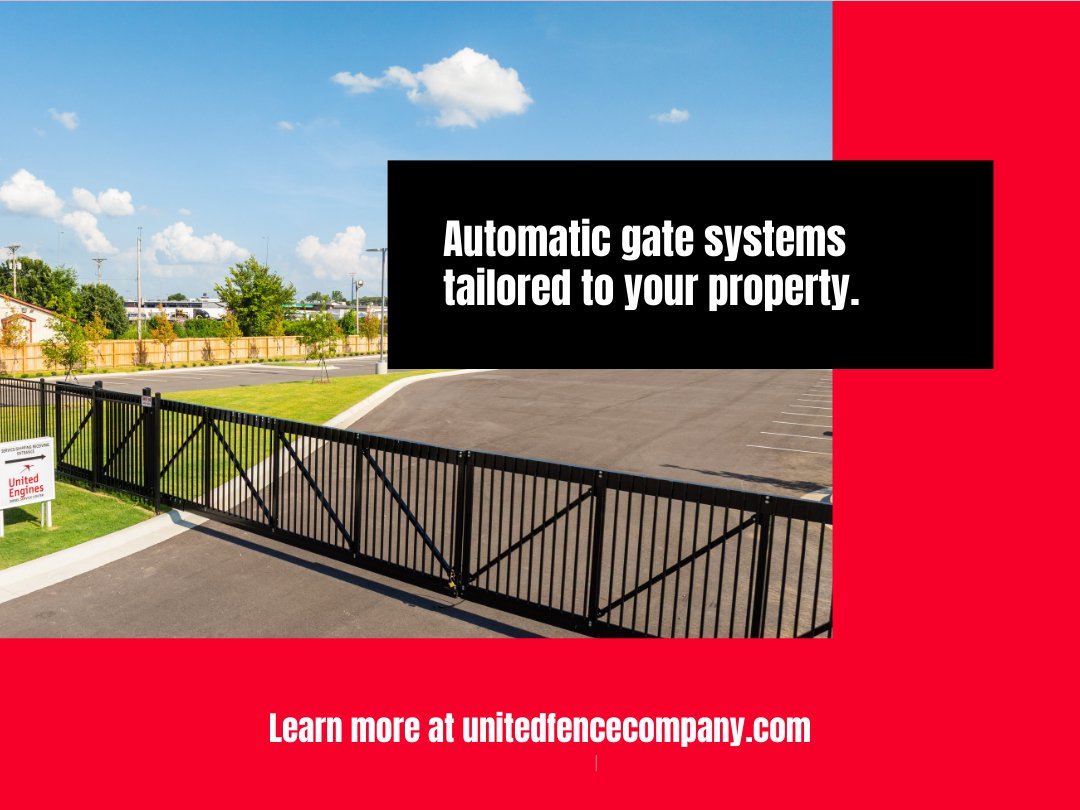
Secure slide gate options allow owners and managers to maintain access control of their commercial property, without compromising security.
If you’re a property owner looking for gated fence options, you know how important control access is. But, you can’t sacrifice safety. With so many secure slide gate options available, choosing the right fit can feel overwhelming. Steel or aluminum? Manual or automated? Let’s go over the different options, and when they work best.
Looking for secure slide gate options in Arkansas? United Fence & Construction Co., helps you find the best fit for your property's unique needs.
Key Takeaways:
- Cantilever gates are the top choice for commercial properties in Central Arkansas
- Commercial gates need thicker steel, reinforced corners, and impact-resistant materials
- Steel provides maximum security, aluminum offers durability with less weight
- Automation improves security and handles high traffic
- Electric operators close and lock gates automatically, manage hundreds of cycles per day, and integrate with access control systems to track entries.
- Multiple locking systems work together for high security, creating a layered defense against tampering.
- Safety features are non-negotiable, such as ensors, safety edges, warning lights, emergency stops, and backup power
- Regular maintenance helps to extend gate lifespan and prevent failures
Secure Slide Gate Options in Central Arkansas
Businesses and commercial properties can choose from several secure gate types. Each option offers different strengths based on space, use, and risk. In most commercial settings, there are three common types to consider: ground track (tracked) slide gates, cantilever/slide-cantilever gate systems, and overhead slide gates.
Are All Secure Slide Gate Options Automatic?
While automatic systems are most common, there are also manual secure slide gate options. However, manual gates require people to move them by hand. Automatic sliding gates (often called a sliding security gate when paired with locks and access control) open and close using motors and controls, simplifying control access for owners and managers. While they can be more expensive, they serve commercial and government properties much better than manual systems.
Contact United Fence & Construction for more information on choosing the right gate system for you.
Benefits of Automatic Gate Systems
Automatic systems handle more traffic without wearing out as fast. The duty cycle of sliding gate motors allows many openings per hour. Manual gates may work for low traffic, but quickly become impractical for busy sites.
Safety features differ between the two types. Automatic gates use sensors to detect people and objects in their path. They stop or reverse when something blocks the closing gate. Manual gates lack these protections and can increase the risk of injuries when sites get busy.
Additionally, automatic gates integrate with access control systems like keypads and cards. They close and lock on their own after each entry. This removes human error and keeps properties secure at all times. Manual gates depend on users to close and lock them properly. When people rush through or forget, it could lead to major security risks.
What Is The Top Secure Slide Gate Option for Commercial Properties in Central Arkansas?
Cantilever slide gates work best for wide openings and tough conditions. They glide on rails without touching the ground beneath the gate (a slide-cantilever gate approach, rather than a ground track design). For many commercial properties in Central Arkansas, this gate option is a top choice.
These gates use two support posts that hold the weight evenly. The design removes strain from motors and extends system life. Single gates span up to 60 feet of opening. Two gates working together cover up to 120 feet.
Cantilever Gate – System Overview + Other Benefits
Property owners choose this secure slide gate option for its smooth operation and minimal ground contact. Cantilever gates suit commercial sites with high traffic and challenging terrain. The higher cost reflects their complex engineering and added materials.
This secure gate option can also resist forced entry better than track-based sliding gates. No wheels or tracks sit in the driveway where debris can jam them. The gate hangs above the ground and stays clear of snow and ice.
The suspended design also works on uneven or sloped driveways. Track gates need level ground to operate without gaps or binding. Cantilever gates adjust to grade changes without losing security or function.
Can Cantilever Gates Handle Strong Winds?
Wind affects cantilever gates less than swing gates but more than track sliders. The gate acts like a sail in strong gusts. Proper engineering and heavy frames reduce this risk for most sites.
These systems need about 50 percent more space than the opening width. A 20-foot gate opening requires 30 feet of fence line for the gate to slide open. This extra space holds the counterbalance (often called the tail section) that supports the suspended gate. Many designs use roughly a “10 tail” concept (about half the opening) to balance a full gate panel.
Why Do Commercial Properties in Arkansas Need Secure Sliding Gates?
Commercial sliding gate solutions handle heavier use than residential systems. They open faster and close more times each day without breaking down.
Frame construction differs between the two applications. Commercial gates use thicker steel and reinforced corners (often with diagonal braces) to resist impact. Delivery trucks and large vehicles put more stress on gate components.
Security levels vary based on property type and risk. Commercial sites often need gates that resist ramming and forced entry. Banks, data centers, and government buildings require high security gates with reinforced posts, heavy-duty locks, and impact-resistant materials.
Access control systems differ in complexity and features. Commercial properties may use multiple credential types like cards, phones, and codes. They track who enters and when through connected software.
Speed matters more for commercial applications to prevent vehicle backups. Gates that open in three to five seconds keep traffic moving smoothly.
Do High-Traffic Apartment Buildings Need Commercial-Grade Gates?
Large or high-traffic apartment buildings benefit from commercial-grade systems. The durability and speed justify the higher cost when many residents use the gate. Standard residential systems wear out too quickly under constant use.
Aesthetic concerns affect property types differently. Apartment complexes often choose ornate designs that match architecture and landscaping. Corporate or commercial worksites balance appearance with function and may prefer contemporary designs with clean lines. Custom designs serve both markets when standard options don't fit the site.
Which Materials and Designs Provide the Highest Security and Durability
Both aluminum and steel materials support wide openings and custom designs. Steel gates can span up to 60 feet in single panels. Aluminum gates handle similar spans while using less energy to operate. The choice between steel and aluminum often depends on security needs. Sites with higher security situations and requirements choose steel for maximum protection. Sites needing lower weight that still offer security often prefer aluminum.
Why Are Steel and Aluminum the Most Common Secure Slide Gate Materials?
Steel and aluminum dominate secure slide gate construction because they offer strength and long life. Steel provides the highest security through its weight and resistance to impact. A steel gate can stop or slow a vehicle trying to force entry. Heavy-duty steel frames resist bending and breaking under pressure. This makes steel the top choice for high-security sites like warehouses and data centers.
Aluminum offers a lighter option that still provides good security and durability. It weighs less than steel but resists rust without special treatment. This natural rust resistance makes aluminum ideal for coastal areas and wet climates. Aluminum gates (including modular aluminum gate options) put less stress on motors and tracks. This extends the life of moving parts and reduces repair costs.
How Access Control Works With Different Secure Slide Gate Options
Access control for sliding gates combines locks, sensors, and smart tech. These tools work together to stop unwanted entry and keep people safe. The right mix depends on your site needs and risk level.
Which Locking Systems Are Most Effective Against Tampering?
Heavy-duty mag locks and electric strikes resist force and prying best. Here are the most effective options:
- Mag locks – Hold gates shut using strong magnets that need electricity. Can hold up to 1,200 pounds of force, making them hard to ram or push open. Work seamlessly with access control systems.
- Electric strikes – Lock into the gate frame and release when triggered. Fit inside the gate post where they stay hidden from thieves who can't reach them to cut or break them.
- Drop bolts – Fall into the ground when the gate closes, adding extra hold points that spread force across the gate.
- Slide bolts – Move into the post or frame for additional anchoring.
- Dual locking systems – Combine a mag lock with a drop bolt for high security. This stops both pushing and lifting attacks while working together through one control panel.
How Do Sensors, Keypads, and Smart Controls Improve Gate Security?
Keypads let users enter a code to open the gate. This removes the need for physical keys that can be lost. Codes can be changed when staff leave or threats arise. Some keypads use scramble pads that move numbers around each time.
Safety sensors detect objects in the path. Photo eyes send beams across the opening. When something breaks the beam, the gate stops or reverses. This prevents crushing people, cars, or pets.
Loop sensors buried in the ground sense metal above them. They tell the gate when a car waits to exit. The gate opens without the driver doing anything. This speeds up traffic and reduces backups; many installers describe these as vehicle loop detectors.
Secure gate opener systems now include smart controls and apps. Users can open gates from their phones anywhere with service. Property managers see who entered and when through activity logs.
Card readers and key fobs add another layer of control. Each device has a unique code that the system tracks. Lost fobs can be removed from the system right away. This stops former users from getting back in.
Cameras paired with intercoms let staff see visitors before granting access. The visitor presses a button and speaks to someone inside. Staff can watch live video and decide whether to open the gate.
Smart gate control systems connect all these tools together. One panel manages locks, sensors, cameras, and access devices. Alerts go out when someone tries to force entry or tamper with parts.

What Safety Features Are Required to Reduce Risks With Sliding Gates?
Automatic sliding gate safety features must prevent crushing and catching. Gates close against a fixed post with great force. Without protection, they can trap people or objects and cause serious harm.
Safety edges run along the leading edge of the gate. These rubber strips sense pressure when they touch something. The gate stops and reverses right away. Edges work even when sensors fail or get blocked.
Protective mesh or screens keep hands and fingers out of moving parts. The mesh covers the area between the gate and post. It blocks access to pinch points where the gate slides past the frame.
Warning lights and sounds alert people when the gate moves. Flashing lights mount on posts near the gate. Beepers or sirens sound before and during operation. These warnings give people time to move clear.
Soft start and stop features reduce sudden movements that surprise people. The gate begins moving slowly then speeds up. It slows down again before stopping. This gives more time to react and step back.
Emergency stop buttons let anyone halt the gate instantly. Buttons mount on posts where people can reach them fast. Pressing the button cuts power and locks the gate in place.
Backup systems keep safety features working during outages. Battery units run sensors, edges, and controls when power fails. This prevents the gate from becoming a hazard in the dark.
Fencing behind the gate blocks access to the track area. People can't walk into the space where the gate slides open. This removes the risk of being hit from behind or getting caught.
Regular testing confirms all safety features still work right. Monthly checks should test sensors, edges, stops, and alerts. Any failed part needs immediate repair or replacement before use continues.
How Should Installation, Automation, and Maintenance Be Planned for Long-Term Security?
Proper planning for installation, automation, and ongoing care determines how well a secure slide gate performs over time. Site conditions, automation choices, and maintenance routines all affect reliability and cost.
What Site Conditions and Space Requirements Affect Sliding Gate Installation?
Sliding gates need level ground and enough side space for the panel to move. A single-panel gate requires about 150% of the opening width as clear space. For a 20-foot opening, plan for 30 feet of fence line to one side.
The driveway must be level from left to right to prevent gaps under the gate. Sloped properties may need light grading or site prep before installation begins. Properties with uneven terrain often benefit from cantilever systems that suspend the gate above ground.
Overhead clearance matters less for sliding gates than for vertical lift or pivot types (like vertical pivot systems). But nearby structures, curbs, and utilities can limit where the gate track or support posts go. Professional installers assess these factors during site visits to avoid conflicts, confirm road width needs for trucks, and match the right gate specifications to traffic flow.
Track-based sliding gates need a flat, stable surface for the rail (ground track). Cantilever gates eliminate the ground track but require more side clearance for the counterbalance system. Some applications also use overhead slide gates with an enclosed track above the opening to keep the driveway clear and reduce debris issues. Both types work well in snow and wind when installed correctly.
How Does Automation Impact Reliability, Safety, and Total Cost of Ownership?
Automation improves security by closing and locking gates without human action. Electric operators reduce the risk of leaving a gate open and allow faster response to access requests.
Automated sliding gates handle more cycles per hour than swing gate motors. This higher duty cycle makes them better for high-traffic sites like warehouses, schools, and apartment buildings. Commercial-grade operators can manage hundreds of cycles per day without excessive wear.
Safety features add cost but prevent injuries and property damage. Sensors detect objects in the gate path and stop or reverse movement. Soft-touch edges trigger stops when the gate contacts something. Protective mesh and barriers keep people away from pinch points.
Solar-powered operators work as backup but need eight hours of direct sun daily. They handle fewer cycles than grid-powered systems. Most commercial sites rely on hardwired electricity with battery backup for outages.
Total cost of ownership includes the initial price, energy use, and repair frequency. Electric gates cost more upfront but reduce labor for access control and key management. Manual gates save money at first but require staff time and consistent user behavior.
Smart controls and access systems add flexibility. Keypads, card readers, phone apps, and vehicle sensors let owners grant or revoke access remotely. These systems track entry times and users, which helps with security audits.
Which Maintenance Practices Extend the Lifespan of Secure Sliding Gates?
Regular maintenance prevents small issues from becoming costly failures. Sliding gates need attention to moving parts, electrical systems, and safety devices.
Maintenance Reference Table for Professional Commercial Gate Systems in Arkansas
| Task | How Often | Why It Matters |
|---|---|---|
| Lubricate moving parts | Every 2–3 months | Helps the gate move smoothly and reduces wear/jams. |
| Check drive chain tension | Every 2–3 months (or if movement looks uneven) | Prevents motor strain and uneven gate travel. |
| Test safety devices | Monthly | Prevents injuries and reduces liability risk. |
| Inspect gate structure | Every 3–6 months | Avoids bigger repairs and extends gate life. |
| Review electrical system | Every 3–6 months (and after heavy rain) | Prevents shorts, control issues, and operator failure. |
| Schedule professional service | Annually (every 6 months for high-use commercial gates) | Catches problems early and keeps performance/safety on track. |
| Choose low-maintenance components (planning or upgrades) | When buying/upgrading | Cuts down future maintenance and improves reliability. |
| Keep maintenance records | Every time work is done | Helps troubleshooting, supports warranties, and shows ASTM F2200 safety compliance. |
Secure Your Central Arkansas Property With the Right Sliding Gate
The right gate option for you, including kind of material and smart access control integration, all matter for long-term security. Steel and aluminum offer the best balance of strength and value. Automation adds safety and ease but requires planning. Regular maintenance keeps gates working well for years.
Choose based on your security needs, site conditions, and budget. A well-installed sliding gate protects your property and gives you peace of mind. Whether you choose traditional chain link cantilever gates, or modern tracked systems, the right features and installation details make the difference for your Arkansas business.
United Fence & Construction, Co. has been providing Central Arkansas with fencing solutions since 1953. We’re here to help you decide which secure slide gate options are right for you. Contact us today, or click the button below to request a quote, and we’ll be in touch.


Leave a Reply